Monday, July 26, 2010

Physics Olympiad

Indian girl (but headed to MIT) wins a gold.

Sunday, July 25, 2010

Wikileaks confirms the Circle of Life

inset_cartoon_queue19170_7767251

Wikileaks has published a huge leak of classified material from US military sources. While the Guardian, UK, has emphasized underreported civilian deaths, the New York Times has emphasized identifying the enemy - the link should lead you to a document summarized thus, from December 2006 - just one of many:
Summary This report suggests that a member of the Directorate for Inter-Services Intelligence is in charge of suicide bombing operations in Kabul, and that he is a graduate of the Haqqania madrasa near Peshawar. The report outlines the general process of preparing a suicide attack.

Apart from drone attacks, the US was delivering such in 2006, and such in 2007.

And so it continues. The 2009 Kerry-Lugar bill gives Pakistan $1.5 billion an year for 5 years. The truth is: The war can't end as long as the US is financing both sides. It must stop financing one side or the other, ASAP.

PS: The Guardian's assessment of this intelligence is that there is no smoking gun.

PPS: Der Spiegel's take: The Secret Enemy in Pakistan

PPPS: The cartoon is said to be by Ajit Ninan.

Saturday, July 24, 2010

Wagah: Beating the Retreat

Friday, July 23, 2010

Summit NJ

Another random teenagers-beat-up-man incident, in another prosperous part of New Jersey. Just weeks after the Old Bridge case.

Two teenagers beat up Abelino Mazariego, originally from El Salvador, and who worked in an Indian restaurant, while one recorded the attack on the phone, and a dozen others looked on.

Al Rehmat Trust

From The Friday Times:

Peshawar weekly Al Qalam stated that Al Rehmat Trust had ended its two month campaign to collect ushr from farmers all over Pakistan. Ushr is 10 percent of the farm produce. Already in South Punjab most religious institutions close down in order to go out and collect ushr. The money is spent on the wounded mujahideen and on families of the martyred mujahideen. (Ushr, which means ten, is collected at 10 percent from rain-fed areas and 5 percent from canal-fed areas. In Pakistan the rate for rain-fed areas is 5 percent while the barani areas are exempted.)


If you google around, Al Rehmat Trust is a front for the Jaish-e-Mohammed, a jihadi outfit in Pakistan.

So we had not known it, but 5-10% of the farm produce in Pakjab goes to supporting jihad against India.

Fat chance for peace.

Wednesday, July 21, 2010

The New Rupee Symbol

Via FT blog

Monday, July 19, 2010

To libertarians

The tax-free paradise that is Pakistan.

The rules say that anyone who earns more than $3,488 a year must pay income tax, but few do. Akbar Zaidi, a Karachi-based political economist with the Carnegie Endowment, estimates that as many as 10 million Pakistanis should be paying income tax, far more than the 2.5 million who are registered.
Out of more than 170 million Pakistanis, fewer than 2 percent pay income tax, making Pakistan’s revenue from taxes among the lowest in the world, a notch below Sierra Leone’s as a ratio of tax to gross domestic product.

Mr. Zaidi blames the United States and its perpetual bailouts of Pakistan for the minuscule tax revenues from rich and poor alike. “The Americans should say: ‘Enough. Sort it out yourselves. Get your house in order first,’ ” he argued. “But you are cowards. You are afraid to take that chance.”

Much of the tax avoidance, especially by the wealthy, is legal. Under a 1990s law that has become one of the main tools to legalize undocumented — or illegally obtained — money made in Pakistan, authorities here are not allowed to question money transferred from abroad. Businessmen and politicians channel billions of rupees through Dubai back to Pakistan, no questions asked.

Sunday, July 18, 2010

Indo-Pak talks

1. The behind-the-scenes story.
2. The historical perspective.

From the Times of India:

Agra again: Qureshi kills peace talks

Put On Backfoot On 26/11, Pak Goes Ballistic

Rajeev Deshpande | TNN


New Delhi: A day after an extraordinary slanging match in Islamabad, the India-Pakistan peace process was in shreds, having suffered a huge setback with Islamabad virtually reneging on a painstakingly drawn-up engagement sequence aimed at normalising ties.
 
    The finger-pointing between the two sides continued on Friday, keeping ties on the boil as Pakistani foreign minister Shah Mahmood Qureshi carried on with the belligerence he displayed at Thursday’s press conference which he addressed with his Indian counterpart S M Krishna in Islamabad.  
    Picking up from where he left off, Qureshi lashed out at India for being “selective’’ and “not fully prepared’’ and reversing gears at the last minute. He even got personal with Krishna, alleging that the minister lacked the mandate and was being tutored on phone all through the negotiations.  
    Shockingly, the assault at a briefing Qureshi held for the Pakistani media in Islamabad came even before Krishna had left for New Delhi. The serious violation of etiquette drew a strong riposte from Krishna just after he reached Delhi. He quickly refuted the charge that he was unprepared for talks, asserting that the mandate given to him was clear and specific.

    More than the bad diplomatic behaviour, what preceded it was a serious blow to the peace process. Qureshi turned bellicose after Pakistan’s failed attempt to force India to discuss Kashmir even when it doggedly refused to meet the precondition: Strong and clear action
against all perpetrators of 26/11.

    Sources said the peace process is not going to be jettisoned because India does not have the “luxury of not talking to its neighbour’’. Foreign secretary Nirupama Rao said on TV that India wanted to continue the dialogue.

    The stated intent apart, the fate of the talks was in doubt in face
of Pakistan’s attempt to re-order their sequence. The Congress leadership chose the “action-on-26/11 first’’ approach because it is loathe to be seen as having forgotten the Mumbai attacks.
Times View

    The Times of India has actively championed the cause of peace between neighbours India and Pakistan, and continues to do so because it believes peace is in the interest of the two peoples. However, the path to peace cannot be strewn with bad faith and blatant misconduct—both of which Pakistan foreign minister Qureshi has displayed in ample measure. Minister Qureshi spurned India’s hand of friendship at the joint media briefing on Thursday when he equated terror merchant Hafeez Saeed with India’s home secretary G K Pillai. He did even worse on Friday when he called a press conference, at a time when his guest S M Krishna was still in Pakistan, only to ridicule the Indian minister by claiming that Krishna was not empowered to take
decisions, and was constantly on the phone with Delhi. This is simply not a peace-makers’s conduct. It is that of a schoolboy bully. Let alone furthering the cause of peace, Qureshi has only raised India’s hackles. And since neither President Zardari nor PM Gilani has rebuked Qureshi so far for his misbehaviour, it appears the foreign minister has not been out of line with the establishment’s thinking. In that case, India can wait until Islamabad gets more sincere about peace. Meanwhile, let the message sink in—there can’t be progress in the peace process unless Pakistan shows greater sensitivity towards India’s hurt and anger at the fact that 26/11 masterminds are not just roaming free in Pakistan, but are preaching murderous hate against India. There can’t be any closure on 26/11 until there is justice.
DIALOGUE TURNS INTO DUEL

The Indian side was not mentally prepared for a dialogue. Pakistan wanted to be decisive and conclusive, India had a last-minute hitch.
The Indian delegation had no mandate to negotiate, the minister received phone calls continuously.

Indians were being selective, they had no flexibility in their negotiations.
If we focus on only one issue (terrorism) it will be difficult to move forward
S M Qureshi


We were fully prepared. My mandate was very clear. We discussed all core and burning issues
I did not call anyone. It is not unusual to consult the political leadership. But I was cut off from India
I don’t want to get into debating
points with him. I think we made some headway
Without progress on terrorism, all else is futile. Timelines are neither feasible nor plausible

S M Krishna

Tuesday, July 13, 2010

Freefall-2

While trying to understand all the economic variables mentioned in Stiglitz's Freefall, it occurred to me to try to draw a causal diagram, like the one below.  Problem is that I don't know enough to do so.  Maybe posting it here will bring in some useful suggestions.

Monday, July 12, 2010

Iceland

Rajan Parrikar's series of photographs of Iceland are worth your time, in case you had not been following them from "My Blog List" on the left.  There are several pages of them, so be sure to click on the "Older Posts" on the page I've linked to.

India's Shame

In an effort to "look good" to the world for the Commonwealth Games, the Delhi government demolished a slumdwellers' school.  Here.
"The government bulldozers came to the school at 11am, after yoga and before English and Hindi lessons. The children and their teachers had three hours to clear the classrooms. By mid-afternoon, the Yamuna Riverbank school was rubble.
"They told us we were a security risk, so we had to go," headteacher Parminder Khaur Somal said. "All my children were crying. I don't know how we can be a threat to anyone."
Somal founded the school five years ago for 180 local slum children living on the banks of the Yamuna river on the outskirts of Delhi. In recent months, she and her pupils have watched a vast new complex of luxury apartments rise 500 metres away: the athletes' village for the forthcoming Commonwealth Games. "We never thought it could be a problem," Somal said.
"If we were a security threat, we could have just stopped classes until after the games. But the law here is just 'might is right,'" Somal said."
The correct response from the world would be to boycott these games.  No athletic competition is worth this.  Every child's tears must be  paid for.

Sunday, July 11, 2010

FREEF∀LL

Freefall is economist Joseph Stiglitz's book on "America, Free Markets and the Shrinking of the World Economy".  Reading it is deja vu

How so? Over on the liberal Pakistani blogs, there is a small crowd that finds the solution of every problem in the (unspecified) correct implementation of Islam.  Whether it is an issue of women losing custody rights to their children in Pakistani family law, or the bombing of shrines and the persecution of minorities, or it is constitutional problems,  Islam, implemented correctly, will fix it.  Stiglitz seems to be pointing out that the same orthodoxy attends to all of America's problems - financial, economic, and even environmental problems: The unregulated free market will fix the problem.   This even when economics is supposed to be science, not a religion nor an ideology.

Friday, July 09, 2010

Goncha will getcha!

I did say Pakistan is banished from this blog, but this is too funny not to share.
From this week's Friday Times (Nuggets from the Urdu press)

Quote:
After 'water war', the 'fish war'

Reported in Daily Express ... Indian fish Goncha had attacked Pakistan and entered its rivers from the sea. Goncha was a cruel variety that ate other fish but it was particularly targeting the Pakistani fish, Kalbans and Palla whose two generations were now at risk. The Fisheries Department warned that if counter-measures were not taken the attack from the Indian fish, Pakistani fish will come to an end.
PS: mucking around on the web will find you that

Kalbans is Labeo calbasu. (picture)
Palla is Notopterus notopterus. (picture) {But the fish meant is the Sindhi "Pallu" or Bengali Hilsa, Tenualosa ilisha. Thanks to ArmenT on BRF for the correction!)
Goncha is likely Bagarius bagarius (or here) (picture)

Since all three fish appear in the Gangetic river system, I don't see how they're upsetting the ecology of the Indus.  Moreover how Goncha arrived from the sea is beyond me.  But then the Urdu press of Pakistan is beyond everybody.

Thursday, July 08, 2010

Solomons MD

This was taken from a speeding car crossing a bridge, so it isn't much of a photograph.  The whole frame highly downsized is here:
20100704-_MG_3368

There is still plenty of detail, here is a 100% crop.
20100704-_MG_3368-2

Unclear on the concept

Describing suicide attacks in Pakistan as “illegal,” the JUD chief {Hafiz Saeed} — who India alleges is one of the masterminds of the 26/11 attacks — demanded public execution of suicide attackers in the country.  - from here.

Wednesday, July 07, 2010

White God Reporting

Matt Taibbi:

The Perry piece used the standard Western-correspondent formula for covering the third world, a formula I'm very familiar with from my Russia days. In it, the moral of every story you write has to be that the backward subject country cannot survive without the indulgence, political protection, and gigantic brain-power of the superior Western societies. At the eXile we used to call this "White God" reporting.

NJ headed for a drought?

" "It's a fact of life in New Jersey: We have a vastly finite amount of water, and we can go very quickly from feast to famine."  - David A. Robinson, state climatologist at Rutgers University in New Brunswick (from here)

Tuesday, July 06, 2010

A murder in Old Bridge, NJ

Read this. Read the comments there.

The latest I can find is this.

Monday, June 28, 2010

Chef: A Novel

Jaspreet Singh's "Chef - A Novel", shortlisted for the Commonwealth Writers' Prize for Best Book, failed to grip me and so back it goes to the library.  It is the story of an Indian army chef in Kashmir - by which I'm not giving away anything, I hope.  Maybe I'll read it some other day.

Sunday, June 27, 2010

Indo-US economic engagement

This letter appeared in my mailbox.

In a first of its kind, the India-US World Affairs Institute of Washington partnered with the Robert H. Smith School of Business, University of Maryland and the Federation of Indian Chambers of Commerce & Industry to prepare a comprehensive report on "How America Benefits from Economic Engagement with India." The authors of the report are Professor Vinod Jain of the University of Maryland and Kamlesh Jain, Director of Research & Education at the India-US World Affairs Institute.

The study, released on June 15 by Congressman Jim McDermott, Co-Chair of the Congressional Caucus on India and Indian Americans, provides, for the first time, a comprehensive analysis of America’s economic engagement with India for the period 2004 to 2009. The analysis covers India’s foreign direct investments into the United States and U.S. exports to India, as well as an assessment of their impacts on the American economy. Also included in the study are the economic impacts Indian Americans are having in the United States.

Tuesday, June 22, 2010

Intelligence and how to get it

From CIP's blog I learned of R.E. Nisbett's Intelligence and How to Get It.  The library had a copy. I'm still in the thick of it.  Of course, I like it because it confirms all my prejudices.   Nisbett makes out a strong case that almost all population differences in IQ can be explained by environmental and developmental differences, and has little to do with genes.  "Can be explained" is different from "is explained" but then that is about as far as we can get with the "soft" sciences.

One of the strongest indications that IQ is mutable and not genetically determined is the IQ increase observed in different cohorts of the same population.  This is known as the Flynn effect. IQ tests are normed for a cohort, i.e., by definition, the 21-25 age group of white Americans have a normally distributed IQ with a mean IQ of 100 and a standard deviation of 15, and by definition the 45-49 age group of white Americans had the same distribution when they were 21-25.  But since the two groups  might have done exactly the same test, it is possible to compare absolute scores on the test, and by that token today's 21-25 year olds are significantly IQ-smarter than the 45-49 age group was at the same age. 

The good news is that IQ can be developed - by better parenting, better teaching methods at school, better environments for children to grow up in, and so on.

The bad news is that IQ is, IMO, somewhat meaningless.  Note the Flynn effect mentioned above. Such has been the increase in IQ raw test scores that by today's standards, the great-grandparents of today's young adult were barely intelligent enough (in IQ terms) to deal with the world. Since that is absurd, it is more likely that people have become much more proficient at taking tests.  IQ in my opinion, is like rank in a school classroom.  It has some predictive properties; is difficult to compare class ranks across a generation or even sometimes across schools.

The bad news also is that for a country like the US, improving the IQ of the population will take some heavy lifting.  Devising effective programs is difficult. For a country like India with a long way to go with respect to literacy, school enrollment, public health, nutrition, etc., big gains in the IQ of the general population are possible because effective programs to remedy these problems can be devised (e.g., simply increase the measures that contribute to the Human Development Index).   If we assume that IQ measures some quality that is of value in coping with the world, then IQ development is essential for the welfare of the people.

Friday, June 18, 2010

More Annapolis

More Annapolis

Monday, June 14, 2010

Banishing Pakistan

Henceforth, Pakistan is banished to another blog of mine, http://observingliberalpakistan.blogspot.com.

I hope that makes this blog more interesting.

Sunday, June 13, 2010

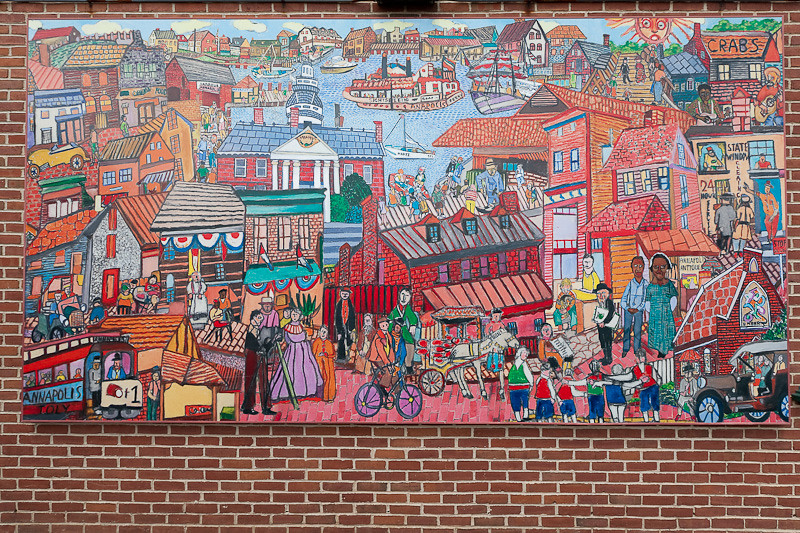
Mural

This was in Annapolis, MD, by the waterfront.
Mural

Mural

Monday, June 07, 2010

Dolphin Leap

Baltimore aquarium.
Dolphin Leap

Wednesday, June 02, 2010

Clematis

This is another clematis variety.
Clematis

Tuesday, June 01, 2010

Lest we forget

Lest we forget just who brought this tide of troubles upon us:
Interview

Q: And neither do you regret having supported the Islamic fundamentalism, having given arms and advice to future terrorists?
B: What is most important to the history of the world? The Taliban or the collapse of the Soviet empire? Some stirred-up Moslems or the liberation of Central Europe and the end of the cold war?
Q: Some stirred-up Moslems? But it has been said and repeated Islamic fundamentalism represents a world menace today.
B: Nonsense! It is said that the West had a global policy in regard to Islam. That is stupid. There isn't a global Islam. Look at Islam in a rational manner and without demagoguery or emotion. It is the leading religion of the world with 1.5 billion followers. But what is there in common among Saudi Arabian fundamentalism, moderate Morocco, Pakistan militarism, Egyptian pro-Western or Central Asian secularism? Nothing more than what unites the Christian countries.

Monday, May 31, 2010

If you say so... continued

Previously (Nov 2006)
"The stereotypic image of the Muslim holy warrior with a sword in one hand and the Koran in the other would only be plausible if he was left handed, since no devout Muslim should or would touch a Koran with his left hand which is reserved for dirty chores."

- Ibn Warraq
- From: The Origins of the Koran, Classic Essays on Islam’s Holy Book
Picture from then: (The New York Times)

"MASKED A militiaman in Baghdad carries a rocket launcher and a Koran during a parade by the Mahdi Army, a militia that is reported to be splintering, as other armed gangs proliferate."


Today: (The Dawn)(link may be temporary)
"A Turkish demonstrator holds the Koran during an anti-Israeli protest in Istanbul in front of the Israeli Consulate."

_______
Times, they have changed.

Saturday, May 29, 2010

Long weekend reading

Shiv's e-book on Pakistan.

Friday, May 28, 2010

It's a small world

Read a story in the Daily Times, Pakistan.
PESHAWAR: Devotees and admirers from all walks of life still swarm the shrine of mystic poet of Pashto language Abdur Rahman Baba to pay tribute to him.

The poetry of Rahman Baba has been enchanting the minds and souls of the people for the last many years. He was born in 1653 in Bahadar Kaley in Peshawar. He passed away in 1711. The poetry of Rahman Baba preaches love, humanity and tolerance. He is held in great esteem by the Pakhtuns.

The shrine located in Hazarkhwani village on the outskirts of the provincial metropolis was bombed by militants on 5th March. Local people say some unidentified men had asked the caretaker of the mausoleum to bar women from visiting the shrine otherwise they would blow it up.

“Some people came and asked the caretaker of the shrine to prevent womenfolk from paying visits to the shrine. A few days later, the tomb was bombed,” an old man sitting at a mosque adjacent to the shrine told this scribe.

During a visit to shrine, it was observed that people of all ages still visit the shrine in large number and no sign of fear was seen on their faces. The women visitors seemed to be least bothered about the threats issued by militants.

The miscreants did their job by destroying the building as they had threatened to do so but could not stop women from visiting the shrine. “Nobody can stop women from visiting the shrine. Women still pay visits to the shrine in large number to pay tribute to the great Pashto language. He is loved by everyone,” Tahir Khan, a visitor said.

“Now it is the responsibility of the government to bring to book the perpetrators of this heinous act so that no body could dare to indulge in such shameful acts in the future,” he added.
The place is easy enough to locate in Google Maps.

A picture of the damage is found too:


And this story.
Last year, I had requested my blogger-friend Aadil Shah to translate some of Rehman Baba’s verse. Little did I know how the poet’s lines could be so relevant a year later:

Sow flowers so your surroundings become a garden
Don’t sow thorns; for they will prick your feet
If you shoot arrows at others,
Know that the same arrow will come back to hit you.
Don’t dig a well in another’s path,In case you come to the well’s edge
Humans are all one body,
Whoever tortures another, wounds himself.


Seeing it up close like this makes it almost personal. This mad destruction of humanity must cease!

Thursday, May 27, 2010

Canon 50L

The Canon 50mm f/1.2L is a difficult lens to use.  At certain subject-camera distance in a certain aperture range it suffers a focus shift - i.e., the focal plane shifts with aperture.  In some sense the lens is not "reliable" like the 135L or 85L  Nevertheless, the pictures on this page make a good advertisement for the lens.

Wednesday, May 26, 2010

Google Code Jam

In the scores of the first round of the 2010 Google Code Jam, the first American flag I see is at the 20th position, and the first Indian flag is at the 54th position. Of course, scores of 100 go on till place 115. Still, I'm disappointed.

Life as a Dhimmi - 8

The story of Radha.

Machine Yoga

Old, but impressive.

Tuesday, May 25, 2010

NYT Oil Spill Tracker

Here you can find the daily extent of the British Petroleum oil spill in the Gulf of Mexico.  A portion of the map for May 22:

Monday, May 24, 2010

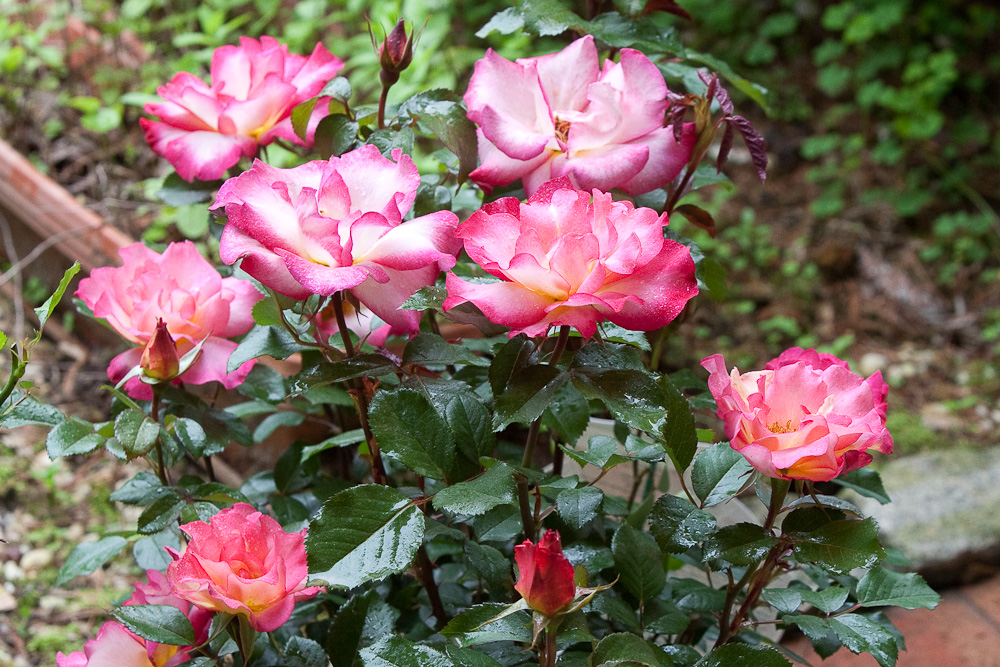
Rainbow Sorbet

I went to the nursery to get some of these,
_MG_2963
which I did, but I also fell in love with a rose, Rainbow Sorbet, and now will have to figure out what goes where.

_MG_2956

_MG_2962

Sunday, May 23, 2010

QOTD

Since when is telling the truth news? - CNN's Rick Sanchez

Saturday, May 22, 2010

How well does this work?

ॐ 
श्री वक्रतुंड महाकाय कोटि सूर्य समप्रभा
निर्विघ्नं कुरु मे देव शुभ कार्येषु सर्वदा!
(
Meaning: The Lord with the curved trunk and a mighty body, who has the magnificence of a Million suns, I pray to you Oh Lord, to remove the obstacles from all the actions I intend to perform.)

---
Should have played with Google transliteration before.  Didn't realize it was this easy.  Will have to see whether it is correctly displayed in all browsers, platforms, etc.  But Google used the power of the network to solve this problem of input of Hindi and other languages in a world dominated by ASCII keyboards.  To quote them:
This feature requires a live internet connection, as all the transliteration is done on Google's servers and sent back to your browser while you work on your message.
Basically they have a dictionary lookup.  So while it works well for Hindi, it will interesting to see how it does on Sanskrit.  The above I just typed in, haven't checked for errors.  Very promising!

PS: Rajan Parrikar sent in some corrections in the third pada.  Turns out it was easier to retype the third pada than to try to fix the few letters.  So it is not perfect, but still much easier than any of the alternatives I'm aware of.

PPS: Corrections from VN Muthukumar via Rajan Parrikar; fourth pada too!

Small lawn riding mowers

This is a a brief (and pointless) review of the Sears Craftsman Rear Engine Riding Mower Model 7800669 Item # 07128034000 (12.5HP Briggs & Stratton Engine with 28" Mower Deck):

It seems I might have bought the only instance sold. This small riding mower was introduced just this February or so, appeared in the stores in late March or April,  and now  I can no longer find it on the Sears web site.

Here are a couple of snapshots of the machine.
Sears Rear Engine Riding Mower


A reviewer must have some experience; my only previous mowing experience was with a Murray Select 30577x8A which gave good service for ten years.  Here is a picture of the Murray. I don't think Murray sells lawn mowers any more - at least I couldn't find any.

Murray rider mower


Comparison of specifications:

The Craftsman and the Murray both use Briggs&Stratton engines with roughly the same power.  The Murray had a 30 inch deck (i.e., it cuts 30" width of grass each pass), and the Craftsman has a 28" deck.  I think the Craftsman machine is lighter - as you can see from the picture there is no superfluous metal on the Craftsman.  In the rear of the Craftsman, you can see two bars - the machine can be tipped over to stand on those - though I haven't tried that yet.  That will in principle make it possible for me to remove the cutting blade, something I never did by myself on the Murray.

You can also see that the Craftsman seat is higher off the ground, which makes it (by physics) less stable, but in practice makes little difference.

The slowest forward speed of the Craftsman is faster than the slowest speed of the Murray which makes for a problem in heavy grass (e.g., if I didn't mow the lawn for a while).  Having to cut through a lot of grass at a higher rate causes the Craftsman to stall - something the Murray seldom did.

Turning radius is about the same.

The Craftsman has some kind of suspension holding the seat so that the ride over bumps is smoother.  It may be the newness of the machine, but the gear shift is much stiffer and it is currently harder to change gears than the Murray ever was.

Sears/Craftsman is very concerned about safety, according to the manual. One safety feature is that there is a blade clutch; the blade instantly disengages if your foot leaves the blade clutch.  So e.g., if you and the tractor fall into a ditch, the rotating blade should not be a hazard.  However, it takes some getting used to.

Another safety feature comes from the fact that (if I remember correctly, I'm not going to search for it) that most mowing accidents occur with 65+ year-olds mowing in reverse gear.   So, unless you follow a careful sequence, you cannot mow in reverse.  What this means in practice is that if you've mowed to a tight spot and have to reverse because there is no room to turn, it means you have to disengage the blade, back out, and then reengage the blade.  This is a bit of a pain.  Maybe I'll appreciate it more when I'm 65+.

But overall the Craftsman does the job and is about as good or bad as the Murray was.  (It is apparently a bit louder, I'm told.)  It is about the only mower I could find in the stores hereabouts of this size and weight.

Why did I buy the Craftsman?

The Murray was just beginning to fall apart.  Maybe I could have found spare parts and mended it. Maybe.

Home Depot, Lowes & Sears all sell riding mowers that are cheaper than the Craftsman, but they're all much larger.  The smallest one bigger than this was about $400 cheaper, but weighed in at 400+ pounds.  Suppose I had to push one of these when they (inevitably) breakdown - the Murray I've pushed up the slope in my backyard all by my lonesome.  )The Craftsman is 314 pounds as per the manual.)

This is a new (and seemingly now discontinued) product, and I was hesitant to be the guinea pig. But it was the only small mower I could find.   I don't understand the American obsession with (large) size.  Nobody's yard in my neighborhood has expanded recently.  Yet the tractors I see keep getting larger and larger.  The Craftsman is actually elegant in that regard.

The annoying part of the purchase was that I needed to purchase an additional attachment to make it a mulching mower (it seems at least from the selection of tractors on display that mulching is out of fashion, you have to buy something additional.  Ten years ago when I bought the Murray, everything mulched)—and I couldn't order it in the store, that would double the delivery fee. It was better to order it online from home, where a single delivery charge covered both the mower and the mulching part. As it turned out, Sears delivered the mower with the mulcher installed.

Apart from the price, I'd recommend this machine to anyone who needed something for a yard of my size - but if you can no longer buy it, what's the point? And why needlessly attract the evil eye? Finding spare parts for the machine might be a problem - though Briggs&Stratton is pretty much a standard.

When I started out, I thought I'd be writing a lament about the decline of American engineering.  But now I appreciate the machine more. If Sears is/was unable to sell these machines, it is their own missteps that are to blame. I hope this iconic American company gets its act together again and is around and has what I need when I next need a mower.


____


PS: I passed by the Sears store. This machine is not represented there.

PPS: The gas tank has a vent, that has to be open a little or else the machine stalls (by design it seems). Another safety feature I guess.

PPPS: December 19, 2010 : saw the model at Sears for $1700+!

PPPPS: May 10, 2012: so far, happy with the machine that I have.

Friday, May 21, 2010

QOTD

There's a new joke doing the rounds: what's the difference between Facebook and the Lashkar-e-Taiba? Answer: Facebook is banned in Pakistan. - Ahmad Rafay Alam in Jang
This second one requires some thought to appreciate. {Hint: think of the possible career of Begum Aishwarya.}
The lead cleric of the Tableeghi Jamaat is a most pious gentleman, as to be expected, given that he delivers the main sermon at the annual congregation in Raiwind. His family is equally God-fearing, especially his lady wife. The only fly in this lady’s ointment is that she is a fanatical fan of the Indian (and, Heaven forbid, Hindu) Bollywood actor Aishwarya Rai-Bachchan. Our mole reports that the lady follows Rai’s films and career with a diligence only reserved by traditional women for their nearest and dearest. Recently, the entire family went to the Holy Land to perform their Umra. While there, Mrs Cleric was observed to be in concentrated prayer. It transpired that she was praying for Aishwarya Rai-Bachchan, and she instructed the rest of the family to follow suit. They all prayed that Ms Rai-Bachchan see the light of day and convert to Islam. “Only when she becomes a Muslim”, Mrs Cleric told a friend on her return to Lahore, “will I rest in peace.”- The Friday Times

Is there really any moral dilemma here?

NPR carried the story of a 27-year old woman who arrived at a Catholic hospital, 11 weeks into her fifth pregnancy and seriously ill. The doctors told the woman that if she continued with her pregnancy she would almost certainly die. She was too ill to transfer to another hospital.

So the woman had the pregnancy terminated, after the nun in charge, Sister Margaret McBride, permitted the procedure, thinking that Directive 47 applied -- "Directive 47 in the U.S. Catholic Church's ethical guidelines for health care providers — that allows, in some circumstance, procedures that could kill the fetus to save the mother." The woman survived.

The Bishop of the diocese, however, promptly excommunicated the Sister.

There is some controversy because the Church never acted so promptly and harshly in the case of (male) priests molesting little children. Leave that aside, let's look at the moral reasoning.

The Bishop's reasoning is ""There are some situations where the mother may in fact die along with her child. But — and this is the Catholic perspective — you can't do evil to bring about good. The end does not justify the means."

According to a professor of theology, "The official church position would mandate that the correct solution would be to let both the mother and the child."

From my perspective, the choices are
a. Do nothing - both mother and fetus die; four children are left motherless.
b. Perform an abortion, mother survives.

The first evil is in doing nothing and letting a tragedy grow bigger than it need be. By doing nothing, you are killing the fetus anyway, so that is your baseline of necessary evil in this situation.

The second evil is in punishing someone for choosing b. If I can't save two, shouldn't I at least try to save one.

Since I don't understand, I guess it is a good thing I'm not a Catholic.

PS: If both mother and child died, and one death was unnecessary, would the Church defend against a claim of medical negligence?

Thursday, May 20, 2010

Bill Maher - Non-negotiable

Via Rajan Parrikar:

Wednesday, May 19, 2010

Opportunity Cost of Jihad

After Mumbai attacks......Pakis got 23 billion dollars including latest IMF aid of 7.xx billion       dollars{Japan??}.....don't know what India's foreign desk is doing :evil:


Question - what is the opportunity cost for Pakistan of its terrorism-sponsoring policies?

Just to set a baseline: Suppose in each year since 2000, Pakistan grew at the same percentage rate as India. Then we'd have a theoretical GDP each year which we can compare to their actual GDP. How much have they lost?

Remember IMF aid, etc., is repayable. And there are interest payments to be made. Even without counting that, I expect Pakistan has over the years lost much more than this $23 billion.

Here is an answer. I used the IMF figures from
http://www.indexmundi.com/pakistan/gdp_ ... _rate.html
http://www.indexmundi.com/india/gdp_rea ... _rate.html
Code:
Year    Pakistan India   P        I        Loss   
2000   4.26%    5.693%  104.26   105.69    1.43
2001   1.865    3.885   106.20   109.80    3.59
2002   3.195    4.558   109.60   114.80    5.21
2003   4.86     6.852   114.92   122.67    7.75
2004   7.382    7.897   123.41   132.36    8.95
2005   7.672    9.211   132.88   144.55   11.67
2006   6.147    9.817   141.04   158.74   17.70
2007   5.638    9.372   149.00   173.62   24.62
2008   2.038    7.346   152.03   186.37   34.34
2009   1.966    5.355   155.02   196.35   41.33
         Cumulative loss                 156.59


For 2000-2009, the GDP growth rate in constant prices from the IMF for both countries is displayed. Then the numbers under P and I show how a baseline GDP of 100 would have grown at the Pakistani and Indian growth rates.  Finally, the difference in each year is shown.

Now, it is a big IF, but IF Pakistan could match India's growth rate (a proposition quite acceptable to Pakistani Honor&Dignity) then for each 100 units of GDP in 2000, it would have cumulatively 156.59 units of extra GDP over the 9 years.

Remember, these numbers are at ***constant prices***.

Is it plausible? Well, Pakistan, even today according to the World Bank is an easier place to do business than India or even China. Their infrastructure is not behind. Their education system is underperforming, from primary school to university, but presumably if they weren't concentrating in Jihad, they'd have repaired it to a good extent. So it is somewhat plausible.

Now, Pakistan's GDP in 2000 was $73 billion (exchange rate, not PPP).

So Pakistan has cumulatively lost 1.56 * $73 billion = $114 billion of constant price GDP over the period 2000-2009.

Admittedly, this is a very iffy calculation. But it shows you how little the 3.5 friends can patch up for Pakistan, their $23 billion or whatever is peanuts. {3.5 friends is BRF terminology for the US, China, Saudi Arabia and UK, that finance and support Pakistan no matter what.}

I wonder when Pakistanis will wake up, if ever.

Tuesday, May 18, 2010

Editorial Cartoons

This dailykos diary has a nice collection of recent editorial cartoons.

Lime Sublime

My Sun Sprite had a bad last season with deer and Japanese beetles; and it did not wake up this spring. The nursery doesn't have any - in fact, I couldn't find any rose cultivar with a strong scent. (I googled quite a few on my phone, checking them out.)

So I got me a copy of Lime Sublime. It's still in the pot, yet to put it in the ground. It is supposed to look like this (from the web)

Lime Sublime


Yellow roses are always difficult and disease-prone, so wish me luck!

Monday, May 17, 2010

Eyes Wide Shut

Read Irfan Husain in Dawn.

Sunday, May 16, 2010

Mumbai attacks: What Pakistan is not telling us

Praveen Swami expounds.

The Taliban use Gmail

See here for an example.(Geo TV's anchor of Capital Talk, Hamid Mir forwarded an email from the Taliban Media Center.)

I think that provides an opportunity to track these folks, provided Google cooperates.

Witch's Brew

SSridhar on BRF writes that the ingredients are:

  • The powerful and autonomous ISI,
  • the indoctrinated Army & ISI officers both serving and retired leading to a close linkage between the regular Army and the terrorist organizations,
  • the mullahs spreading venom every Friday from the kutbah,
  • the Pakistani State's involvement with extremist organizations - benign in certain cases and active in others,
  • the State's tolerance of the presence of militias of Uzbeks, Chechens, Turkmens, Tajiks, Uighurs, Indonesians and Arabs who have all cut deals with the tribes of NWFP for protection, hospitality and support,
  • the lawlessness of the FATA where the Federal laws of Pakistan do not operate,
  • the intra-Afghan strife after the withdrawal of the troops from FSU and the involvement of Pakistani security and intelligence agencies in the intrigues and power struggles,
  • the huge cache of funds and leftover arms from the Afghan campaign,
  • increasing poverty caused by decades of economic mismanagement,
  • an opium industry patronized by the Taleban, Al-Qaeda and the ISI as an easy source of funding for procuring arms and promoting terrorist activities,
  • the spiralling madrasseh generously supported by fundamentalist charity organizations from the Middle East, especially the Wahhabi Saudi Arabia, spewing out the extremist Wahhabi or Deobandi interpretation of Islam,
  • the capitulation of the Government to the increasing Talibanized appraoch of these madrasseh,
  • the indoctrination of young minds even in mainstream non-madrassah schools as a state policy,
  • the fratricidal sectarian wars between Sunnis and Shias on the one hand and mohajirs and natives on the other, the intra-sectarian conflicts among Sunni Wahhabis, Berelvis and Deobandis,
  • the deep ethnic fault-lines among the Punjabis, Seraikis, Sindhis, Balochis and Pashtuns,
  • the collective hatred against the Americans, Jews and the Hindus (the Yahud-Hunud-Nasara conspiracy to deprive the Muslims of their rightful place as popularized in Pakistan),
  • a single minded obsession to defeat a much bigger and more powerful India militarily
  • and the State policy to use terror as a weapon against India and Afghanistan
all acted as a potent mix, and continue to do so with increasing vigour, in the terrorism brew.

Saturday, May 15, 2010

The New Taliban

Newsweek outlines the new Taliban.

They're younger than ever, fiercer, believe they're fighting for the survival of Islam, less disciplined, and have little allegiance to traditional authority in Afghanistan.

Friday, May 14, 2010

Don't forget what you do have!

Borrowed from Sayesha:

Thursday, May 13, 2010

Books

Not sure anymore why I'm reading these:

* The History of White People, by Nell Irvin Painter.
* The Limits of Influence: America's Role in Kashmir, by Howard B Schaffer.
* The Science of Liberty, by Timothy Ferris.

What things worth knowing will I know after reading these books?

Not totalitarian enough!

Nadeem Paracha points out that Islamic extremists turning against their allies and sponsors is not a new phenomenon. In recent history,
The most startling event in this respect took place in Saudi Arabia. ln 1979, an alarming incident occurred, which most history books across the Muslim realm have almost completely expunged from their pages.
This was the attack on the Grand Mosque in Mecca.
All of them were followers of Abdul Azizi bin Baaz, who was Saudi Arabia’s Grand Mufti. Baaz had been highly critical of late King Faisal’s moderate reforms that had seen the setting up of the kingdom’s first television station. Faisal had also given conditional permission to the kingdom’s women to work in offices, even though the country remained an ultra-conservative Sunni Wahabi state.
After a long and bloody battle that cost 900 lives, Saudi forces took back the mosque.
Logically the Saudi regime was expected to launch a crackdown on fundamentalists after the tragedy, but it did what most Muslim regimes usually do in the face of a movement or insurgency by fundamentalists: i.e. it rolled back whatever few social reforms it had initiated and became even more subservient to the puritanical clergy.

And here is where most Muslim regimes and societies have faltered. Faced by pressure and violence from Islamists, many regimes in the Muslim world have historically tried to work out their survival by giving in to a number of regressive and myopic demands of the Islamists – something the current government and parliamentary opposition in Pakistan has only recently realised and attempted to rectify.

To me it seems that politics in Islamic countries always involves the "more pious than thou" card that trumps any other argument.

Wednesday, May 12, 2010

Copenhagen Climate Talks: two points of view

Spiegel Online
How China and India Sabotaged the UN Climate Summit

What really went on at the UN climate conference in Copenhagen? Secret recordings obtained by SPIEGEL reveal how China and India prevented an agreement on tackling climate change at the crucial meeting. The powerless Europeans were forced to look on as the agreement failed.

Times of India:
How India saved China from isolation at Copenhagen

BEIJING: India foiled an "ambush China" strategy of western nations including the United States at the climate change talks in Copenhagen last December. This is why Chinese leaders now regard India as a crucial partner in the global arena, Jairam Ramesh, minister of state for environment said here on Sunday.

Tuesday, May 11, 2010

Iris

Some more of the bounty of spring.


Iris

Monday, May 10, 2010

Spring Clematis

For whatever reason, this particular clematis is exuberant this spring. The flower is about 16 centimeters across, I just got up and measured one.

Clematis

Clematis

Sunday, May 09, 2010

Four metaphors

Your major non-NATO ally - breeding ground, nursery, supermarket, Walmart.

1. A breeding ground for Islamism.

Salim Mansur writes in the Toronto Sun:

Since Britain conceded to the demand for Pakistan in the face of religious frenzy pushed by middle- and lower-class Muslim activists, the country’s history has been a series of failures of its own making. These failures have deeply embittered the thinking of that class of Pakistanis from whose rank the ruling elite comes, and whose regular pastime is to parcel blame to others for their part in making Pakistan a terrorist-exporting rogue and failed state.

2.  Irresistible lure of Pakistan as nursery of global jihad (URL may be temporary)

Lehaz Ali writes for the AFP:

...radicalised youth have long felt an irresistible pull to Pakistan as a nursery of modern jihad.

3. Terrorism's Supermarket

Fareed Zakaria writes in Newsweek:

For a wannabe terrorist shopping for help, Pakistan is a supermarket......Until the Pakistani military truly takes on a more holistic view of the country's national interests—one that sees economic development, not strategic gamesmanship against Afghanistan and India, as the key to Pakistan's security—terrorists will continue to find Pakistan an ideal place to go shopping.

 4. WalMart of private sector proliferation

Director General of the IAEA, Dr. Mohamed El Baradei called Pakistan the "WalMart of private sector proliferation".

==========

Please note that I have been frequently accused of severe anti-Pakistan bias; as though that makes what I'm saying less true somehow.   Please note that all four quotes above are from people whose name is Muslim; the first three appeared in the last twenty-four hours. None of them is mine.  You want to ignore all this in the name of political correctness or because it makes you feel better about yourself - so unbigoted - the outcome is on your head.

==========

PS: every Indian who has thought about this that I know is convinced that a nuclear explosion enabled by Pakistan in an Indian city is inevitable; therefore it is best to get over with this as early as possible.

Saturday, May 08, 2010

The Mother of the Race

"The History of White People"  lives up to its blurb.  Nell Irvin Painter has indeed given us a "mind-expanding and myth-destroying exploration of the notions of white race—not merely a skin color but also a signal of power, prestige and beauty to be withheld and granted selectively."

Excerpt:
Chapter 6
Johann Friedrich Blumenbach Names White People "Caucasian"

A reader might sensibly wonder why the social sciences, the criminal justice system, and, indeed, much of the English-speaking world label white people "Caucasian". Why should this category have sprung from a troublesome, mountainous, borderland just north of Turkey, from peoples perpetually at war with Russia in the present-day regions of Chechnya, Stavropol Kray, Dagestan, Ingushetia, North Ossetia, South Ossetia, and Georgia? The long story begins in Göttingen, Lower Saxony, in 1795, and the better-known part of it belongs to Johann Friedrich Blumenbach {1752-1840}.

Blumenbach was the author of De generis humani varietate nativa (On the Natural Variety of Mankind).
By 1795, twenty years had passed since the first publication of On the Natural Variety of Mankind.  In the interim, skin color, not heretofore the crucial factor for Blumenbach, had risen to play a large role. He now sees it necessary to rank skin color hierarchically, beginning, not surprisingly, with white.  Believing it to be the oldest variety of man, he puts it in "the first place".  His reckoning includes a large dose of aesthetic reasoning, led by the blush.
...
...
With the concept of human beauty as a scientifically certified racial trait, we now come to a crucial turning point in the history of white people. Now linking "Caucasian" firmly to beauty, Blumenbach remained divided of mind. Holding first place in his classification was always the scientific measurement of skulls. But second within human variety came a concern for physical beauty, going well beyond the beauty of skulls and giving rise to a powerful word in racial thinking:
"Caucasian variety. I have taken the name of this variety from Mount Caucasus, both because its neighborhood, and especially its southern slope produces the most beautiful race of men, I mean the Georgian."
A long footnote follows, quoting the seventeenth-century traveler Jean Chardin as only one of a "cloud of eye-witnesses" praising the beauty of Georgian women. Blumenbach's quote leaves out Chardin's disapproval of Georgians' heavy use of makeup, their sensuality, and the many bad habits Chardin had deplored. Now Chardin intones to Blumenbach the gospel of Georgian beauty.....
....
Beauty's charms reached into science, but what of science's bedrock, the measurement of skulls?

Now Blumenbach squirms. By turns he embraces Enlightenment science—the measurements of his skulls—then lets go to reach for romanticism's subjective passion for beauty. Yes, skull measurements count, but when it comes down to it, bodily beauty counts for more, but no, no, not conclusively. Even while extolling Caucasian beauty, he adopts a third line of reasoning meant to puncture European racial chauvinism. Consider the toads, says Blumenbach: "If a toad could speak and were asked which was the loveliest creature upon god's earth, it would say simpering, that modesty forbad it to give a real opinion on that point." As in the first edition of On the Natural Variety of Mankind, Blumenbach qualifies his estimation of European beauty as rife with European narcissism.

Even so, he uses the word "beautiful" five times on one page in describing the bony foundation of his favorite typology, a Georgian woman's skull. It is "my beautiful typical head of a young Georgian female [which] always of itself attracts every eye, however little observant".

The story behind this skull is a sad one.
In 1793, shortly after Catherine had won her second Caucasian war against the Ottomans, Asch {Blumenbach's benefactor, Georg Thomas Baron von Asch {1729-1807}} sent Blumenbach a pristine female skull, explaining its provenance in a cover letter. The skull came from a Georgian woman the Russian forces had taken captive, precisely the kind of situation figuring in so many descriptions of beautiful Caucasian and Circassian women: as an archetype, she is a pitiful captive lovely in her subjection. Actually, the perfect appearance of the teeth support a suspicion that the owner was a very young person, indeed, more adolescent than woman. In this case, the story continued to its tragic end when the woman or girl was brought back to Moscow. Although Asch sheds little light on her life in Russia, he does tell us that she died from venereal disease. An anatomy professor in Moscow had performed an autopsy before forwarding the skull to Asch in St. Petersburg. Ironically, perhaps, the woman whose skull gave white people a name had been a sex slave in Moscow, like thousands of her compatriots in Russia and the Ottoman empire.

"Once Blumenbach had established Caucasian as a human variety, the term floated far from its geographical origin."  There were several more steps before "Caucasian" as a term for white people reached the English-speaking world. You'll have to read the book.  But Blumenbach set the ball rolling. And, I imagine, the world still labors under the curse of the enslaved young girl. For Blumenbach's ideas were eventually morphed into an ugly ideology whose effects still are around us.


Wiki: Blumenbach's beautiful Georgian skull

Friday, May 07, 2010

Jinnah's Pakistan?

Ardeshir Cowasjee, in Dawn
The Objectives Resolution, legislation which would never have been permitted by the founder maker of this country, Mohammad Ali Jinnah, came into being in March 1949, a mere six months after his death when his loyal lieutenants succumbed to the pressures of the religious right which sought to impose its will on a country, the formation of which it had either opposed or stood by silently while the Muslim League struggled. It negated all that Jinnah had stood for, if we are to take as our guideline his famed address to the constituent assembly of Aug 11, 1947, when he declared that faith, caste or creed were to be put aside and all were to be equal citizens of one country, and, most importantly, that religion was not the business of the state.

The most ominous words spoken that March day when the resolution was passed by the constituent assembly were spoken by Hindu citizen of Pakistan, Sri Chattopadhyay, who represented 25 per cent of the then East Pakistan population.

“I do not consider myself as a member of the minority community. I consider myself as one of seven crores of Pakistanis. Let me retain that privilege.

“I sadly remind myself of the great words of the Quaid-i-Azam that in state affairs the Hindu will cease to be a Hindu; the Muslim shall cease to be a Muslim. But alas, so soon after his demise what you do is that you virtually declare a state religion.

“You could not get over the old world way of thinking. What I hear in this resolution is not the voice of the great creator of Pakistan — the Quaid-i-Azam, nor even that of the prime minister of Pakistan, the honourable Mr Liaquat Ali Khan but of the ulemas of the land.

“This resolution in its present form epitomises that spirit of reaction. That spirit will not remain confined to the precincts of this house. It will send its waves to the countryside as well. I have been passing sleepless nights pondering what shall I now tell my people whom I have so long been advising to stick to the land of their birth.

“And on the top of this all, by this resolution you condemn them to a perpetual state of inferiority. A thick curtain is drawn against all rays of hope, all prospects of an honourable life. After this what advice shall I tender? What heart can I have to persuade the people to maintain a stout heart?”

While Cowasjee presents this as a departure from Jinnah's vision, to most Indians, the above is an inevitable outcome of Jinnah's politics. Whether he wanted it or not is another matter. But you cannot upend a glass of milk and not expect it to spill.

Thursday, May 06, 2010

Then and Now

What a difference a few months makes!

November 4, 2009
No terrorist camps in South Punjab: Taseer

Governor Salman Taseer has said that there are no terrorists training camps in Punjab and the people of the province are very peaceful.
May 2, 2010
Pakistan's Punjab heartland alive with extremist groups
........
"The Sharifs are creating a potential bomb here in Punjab," Salman Taseer, the governor, told McClatchy in an interview. "These (militant) groups are armed and dangerous. There is no way you can accommodate these people. There has to be zero tolerance."

Wednesday, May 05, 2010

The Times Square bombing case

The suspect, Faisal Shahzad, is in custody. The NYTimes, in the middle of an article telling us how normal Faisal Shahzad was until a few months ago, includes this mysterious occurrence from five years ago:
George LaMonica, a 35-year-old computer consultant, said he bought his two-bedroom condominium in Norwalk, Conn., from Mr. Shahzad for $261,000 in May 2004. A few weeks after he moved in, Mr. LaMonica said, investigators from the national Joint Terrorism Task Force interviewed him, asking for details of the transaction and for information about Mr. Shahzad. It struck Mr. LaMonica as unusual, but he said detectives told him they were simply “checking everything out.”

I don't think it is normal to be on the radar of the national JTTF.

Shahzad's attempt at bombing was very crude, and this after he is reported to have admitted to explosives training in Pakistan.

All in all, there is something fishy in the narrative we have so far.

Gulf of Mexico tragedy - updated

WASHINGTON — In a closed-door briefing for members of Congress, a senior BP executive conceded Tuesday that the ruptured oil well in the Gulf of Mexico could conceivably spill as much as 60,000 barrels a day of oil, more than 10 times the estimate of the current flow.
From the NYT.

This is an Exxon Valdez every 4 days or so; with no end in sight.

The coming apocalypse

The editor of orbat.com has a dire prediction


  • Back to the last-known ultra-hawk on Pakistan. Editor should clarify he is the last of the immediate post-independence generation. But there is a new generation of Indian ultra-hawks coming up. Unlike the editor, who was lonely voice calling in the wilderness - gosh, Editor is so poetic, this new generation is emerging in great numbers - millions, perhaps tens of millions. Editor was tolerated by the Indian establishment because the Indian establishment used to tolerate an immense amount of dissent. He had no following, and his calls for a war to reunite the subcontinent or face the destruction of India was considered amusing - among Editor's supporters, and of no consequence among his detractors. Every time he called the establishment traitors, poltroons, corrupt this and thats because the Government wouldn't go to war, he was ignored (except once, which is the reason he's here in America and not back in America, but that's another story). In other words, Editor was a complete non-entity in the circles that matter.


  • But this new lot, now in their 20s-50s, has the power of numbers. They will come to power when Editor has gone to his heavenly reward (okay, we exaggerate - down to the Hot Place), but perhaps someone will remember that the Editor predicted their rise.


  • So shouldn't Editor be delighted that this will happen? Not one bit.


  • You see, Editor is among the last of the generation who does not, despite all the wars, regard Pakistanis as enemies. He regards them as wayward brethren, led astray by their political leaders - and India's - into accepting Partition when the evidence of millennia says an India that does not control the Northwest will have no security. This is not some emotional attachment to the place of his birth, because frankly he was a child and has no memory of it. Its simply a cold calculation of the national security calculus.


  • But: and this is the point here - the new generation does regard Pakistanis as enemies. The Indo-Pakistan wars were relatively clean matters of honor between brothers. But the terrors and insurgencies Pakistan has unleashed on India are dirty, brutal, and horrific. The 20-50s have grown up in a completely different environment. On an abstract level, of course these young Indians know the people of Pakistan are not their enemies, that they are victims of a six-decade old military-feudal-political nexus that has pillaged Pakistan and the people can go hang.


  • At the same time, this new generation does not care. If 10- to 50-million Pakistanis have to die to end the Pakistan problem, they have no problems with that. Increasingly, they want Pakistan gone, and how it is made to be gone is not something they are interested in.


  • This growing up generation (or generations) does not accept the classic Indian muddle-on-regardless way of life that characteristics India. They want things done, and they want them done right. Many have embraced the "can do" philosophy of America. To them, Pakistan is a cancer, and how do you deal with a cancer? You don't negotiate with a cancer.  You kill it.


  • So is Editor saying 10-years from now or 20-years from now India is going to go for an all-out war that could even involve N-weapons? Well, yes and no. The no part is the date: Editor cannot say when this will happen. The yes part is, it will happen, and if nuclear release has to be ordered, the new generation will order it.


  • Before everyone starts having a fit, please realize the Indian economy is at least six times if not more bigger than Pakistan's. India has at least six times more people. India's conventional superiority is so great that it does not need to consider any nuclear strike.


  • But see - that's the Editor talking. The new generation is not going to sit around after attacking Pakistan, and wait for Pakistan to make the first N-move, say a few warheads aimed at an Indian strike corps inside Pakistan. (That's not going to stop the strike corps, but we digress.) It will take as a starting assumption that India must set the parameters for any potential N-use that results from an Indian attack on Pakistan. In other words, if the strategists say India will have to begin the offensive with a Pakistan-wide preemptive strike, the new generation will do what it has to do.


  • We're not worried about Pakistani retaliation, and we wont here discuss why not. What we're concerned is that millions of innocent Pakistanis could die. More than that, we're worried that the new lot will NOT want to absorb Pakistan. They will destroy the country, and sow the land with salt. They will make sure it is not a threat for 50-years, or 100-years. Aside from a few minor adjustments of the international border, and the recapture of Kashmir, India will leave the rest of Pakistan alone, because it does not want another couple of hundred Muslims to deal with.


  • But, see, that's not going to solve India's security problem. As it is we are threatened by Pakistan's growing instability. What's left of Pakistan after the Indians finish with it will be many times more unstable, and many times more dangerous. In other words, war as the new lot will plan and execute will not help India.


  • This is not a scenario. It is a prediction, written in shorthand, by an analyst (the Editor) who tends more than most to speak in much compressed phrases.


  • Just remember you read it here.

Tuesday, May 04, 2010

White House Correspondents Dinner

President Obama and Jay Leno at the White House Correspondents' Dinner. Obama outjokes Leno.

Monday, May 03, 2010

Slipped the leash?

Dawn: Deobandi leadership shies away from condemning suicide bombings
LAHORE, May 1: The Deobandi leadership in the country has for the moment refused to give a consensual nod of disapproval to suicide attacks and other acts of militancy — despite efforts by some members to reconcile the school to new realities
If you read through the article, you will see that the Deobandi Ulema claim to be at a loss as to how to control the jihadi monster that they have created.
“The only lasting solution to the issue lies in talks. If the government is willing to talk (to the militants) on some solid, concrete points, we are ready to act as a bridge and mediate between the two parties. But before proceeding in that direction the government has to distance itself from the American policy objectives. You cannot stop suicide attacks and terrorism as long as you are seen to be standing side by side with the United States,” he {Maulana Samiul Haq} contended.
This is the same spiel Pakistan gives India "we cannot control terrorism, but talk to us and terrorism will go away".

Just how?

Sunday, May 02, 2010

Catastrophe

It would appear that British Petroleum and the government have been underestimating the volume of petroleum leaking into the Gulf of Mexico from the Deepwater Horizon well.  See this from the SkyTruth blog.  They estimate an average of 26,000 barrels a day (the news media said 1000 barrels a day, and then revised it upwards to 5000 barrels a day). This spill will soon surpass the Exxon Valdex disaster and there is no end in sight.

The looming catastrophe is enormous. Devilstower outlines the worst case scenario on dailykos.com.
What we are facing is something far beyond what most people would think possible for the loss of a single well. Something nearly incomprehensible. Should it continue, this will be a oily-Chernobyl for the Gulf of Mexico. Oyster beds that have been sustainably harvested for over 130 years are already being lost. Shrimpers, fishermen, businesses that depend on tourism -- all are looking toward a not a decline, but an end to these industries that could last for years. The loss of fisheries alone could lead to shortages of sea food worldwide and economic collapse of coastal towns.

The economic damage is only part of it. Wetlands that shelter not just endangered species, but the coasts beyond, could become dead marshes of oil-soaked stumps and the oil-soaked bodies of dead wildlife. Animals that live in the Gulf -- from the smallest fish to Sperm Whales -- are threatened. Both total population and diversity in and around the Gulf may be impacted for a generation.

Let's hope it doesn't happen (I know what's at the top of my prayer list this Sunday). Let's hope that the worst case turns out to be the "laughably overblown case," that even now the flow of oil is easing, and that within a week some unexpected solution is in place. Let's pray for all of that.

Incoherence

I started reading Andrew Sullivan's "The Conservative Soul - How we lost it, how to get it back". Even got through several chapters. Then I realize that I don't understand what he's saying.

Now, if the "we" referred to the Republican Party, so that an alternate title could be - "The Conservative Soul - How the GOP lost it, how the GOP can get it back", that would make perfect sense. This is not what the book is about. Andrew Sullivan describes two sets of people, with diametrically opposed ideologies, as conservatives! The only common feature of these two sets of people is that they both are skeptical of government. Well, a progressive advocating that the government must take up a certain task is not less skeptical of government, only more skeptical of the other mechanisms like the "free market" to accomplish that task.

For example, historically, the "free market" did very little to undo segregation in the South. Ultimately it took federal government power (superseding the state governments). The Leftist or whatever you want to term the people who fought segregation was using the government as the last resort, not as the instrument of choice. But you cannot in good conscience let a few more generations rot away while the southern segregationists take their sweet time to change their minds. The southern racists could have simply dropped their fight supporting segregation and no federal government involvement would have been there. Affirmative action came out of a people's unwillingness to give up their unreason, and not because some progressives were in favor of bigger government. {The same is true of the Civil War.}

The point is that skepticism of government is not a defining characteristic of a philosophy. It no more defines two different ideologies to be conservative than it distinguishes between conservative and progressive.

An alternative meaning that one can apply to the title is that the biggest, loudest, meanest faction that declares itself to be conservative owns the title, and Andrew Sullivan wants instead some other faction to take over. But the book then becomes something, that in extreme would be, for instance, "Progressives should take over the conservative movement", or "Muslims should run the Vatican".

Either being conservative is a property of a soul, and Andrew Sullivan is saying that we don't have any such souls any more (else, where have they gone?) or else conservative is a label attached to a specific set of people, and they have swung between one ideology to another, in which case, being firmly attached to their souls, they couldn't have lost the conservative soul.

The Republican Party is fundamentally incoherent, and Andrew Sullivan merely reflects the confusion. The only reason to be interested in the Republican Party and its broken thinkers is out of concern for democracy, which cannot long last with only one working party.

Saturday, May 01, 2010

Tragedy

The Gulf Coast is under threat from a huge and growing oil slick. Boston.com has some photographs.

IMO, the only approach to safety is to accept that accidents are inevitable. All you can do is reduce the probability of an accident and to mitigate the effects of accidents.

Any claim that "we've reduced the probability of accident to be so low that it will never happen" is simply arrogance.

PS: Risk mitigation has to consider the worst case scenario, especially if the worst case scenario is a huge catastrophe.

Seeing Pakistan clearly

Outlook India published an article by Khurram Hussain: "To Understand Pakistan, 1947 Is The Wrong Lens. The hurt that moves Pakistan is from a wound more recent—1971".

First, Indians tend not to remember 1971 as a Pakistani civil war, but rather as India’s “good” war. It is remembered as an intervention by India to prevent the genocide of Bengalis by Pakistanis. The fact that the Bengalis themselves were also Pakistanis has been effaced from the collective memory of Indian elites.

My response: Not at all. Of course, most Indians alive today were born after 1971 and aren't particularly interested in history, but to the extent it is remembered, Indians know Bengalis were East Pakistanis.

Second, the Indian establishment routinely misconstrues as ideological schizophrenia the Pakistani intellectual classes’ complicated responses to India.

My response: The schizophrenia is very apparent in Pakistan's response to its jihadis turning on Pakistan, with N attacks and suicide bombings. It is a Hindu/American/Jewish conspiracy against Pakistan is the primary response. Or it is CIA and Blackwater.

This leads to the third, and perhaps the most important point. The Indian establishment does not see Pakistan as a ‘normal’ society. The substance of this abnormalcy is religion, which is also the irreducible difference between the two societies. It is the original sin and a foundational incoherence that is ultimately inescapable. And it has tremendous explanatory power. It explains both the ideological nature of the Pakistani state’s hatred of India and, simultaneously, the state’s manipulation of the zealous masses for its own ends. That these two explanations do not hold together coherently is besides the point to most Indians. This is an old story and is as such sensible. In the Indian imagination, Pakistan is endlessly regurgitating the politics of Jinnah and the erstwhile Indian Muslim League. While Indian politics moves on, Pakistan’s holds eerily still.

My response: Well, the constitutional questions not settled at Independence still continue. Is Pakistan to be secular? Democratic? Was Pakistan made for Muslims or for Islam? Will the principle of civilian control of government instituted by one-person-one-vote hold? The Constitution is still being tinkered with; maybe the 18th amendment to the 1973 Constitution (which displaced the Constitutions of 1956 and 1962 and itself was effectively overthrown and now reinstated) will settle things down once and for all; and these debates will take on an academic character.

Regarding the alleged incoherence of the Indian explanation of Pakistan, Hussain merely asserts, he does not explain how it is incoherent. He does not explain e.g., how the fact that the Pakistani state school curriculum has been distorted has a better explanation than the ideological hostility plus manipulation of the masses. To dispalce an explanation that works quite well, Khurram Hussain will have to provide a better one. Not an easy task.

----

But K.V. Bapa Rao has a focus on a different point and a more incisive reply.
This article is a perfect example of what is really wrong with what is sadly, an example of perhaps the best and most thoughtful brains that Pakistan has to offer--they can't, or won't, come to terms with the fact that there is something wrong with being focused on their loss to what they consider an inferior "Hindu" India, all the while having no interest to speak of in examining what it is about their civilizational mindset that makes it all right for them to blithely gloss over one of the most sickening crimes against humanity their country committed in 1971.